531.00 GBP
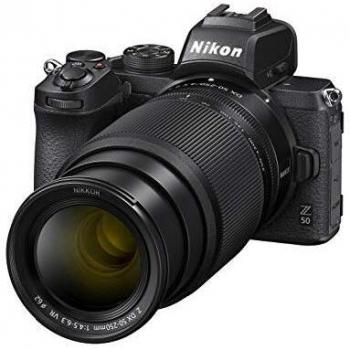
 Nikon Z50 Body Mirrorless Camera
The Nikon Z50 is a mirrorless camera that offers 209-point Hybrid AF, high speed image processing, and 4K UHD movie recording. It also features a high resolution LCD monitor for clear viewing
Stores where to buy this product
 Pro-Camera
The Nikon Z 50 is an excellent camera for photographers and videographers alike. With a resolution of 20.9 MP and an ISO range of 100 to 51,200, it can deliver stunning images in any lighting conditions. The camera also comes equipped with the latest Expeed 6 processor, ensuring fast image processing and high speed performance.
Another highlight of the Nikon Z 50 is its autofocus system, which features 209 focus points and is known for its speed and accuracy. The camera also offers impressive 4K video capabilities with a frame rate of up to 30 fps, as well as a variety of shooting modes such as slow motion and timelapse recordings.
The design of the camera is highly ergonomic and user-friendly. The Z50 features a high-quality magnesium alloy body and comes with an intuitive menu system that even makes it easy for beginners to get started in photography.
The Nikon Z 50 is also very lightweight and portable, making it an excellent choice for travel photographers. The camera comes equipped with a built-in flash and is compatible with a wide range of lenses specifically designed for the Z-Mount system by Nikon.
Overall, the Nikon Z 50 is an excellent camera that stands out for its high image quality, user-friendly design, and versatility. It's a perfect entry point for photographers looking to get into mirrorless cameras, as well as a great addition for experienced Nikon users.
| This product in Comparor | |
|---|---|
|
Category
This product is cataloged in our store in these categories
|
- Compact System Cameras |
|
International
Find this product in one of our international stores
|
 573.00 EUR  999.00 CHF  864.17 EUR  799.00 EUR  389.00 EUR  681.11 EUR  520.87 EUR |
| Colors
Predominant colors of the product |
|
| Tags | 209-point Hybrid AF Speed image processing 4K UHD movies Resolution LCD Monitor Nikon Z50 Body |
| Identifiers | |
| Brand |  Nikon is a Japanese company that produces cameras, lenses, binoculars, microscopes, and other optical equipment. It was founded in 1917 as a manufacturer of optical glass and instruments. Nikon entered the camera market in 1948, and has been a leading producer of digital cameras since the release of the Nikon D1 in 1999. Nikon is also a major supplier of camera components to other camera manufacturers. |
| MPN | Nikon VOA050AE |
| ID | 15392529 |
| Dimensions / Weight | |
| Key Features | |
|
Audio formats supported A list of audio codecs and file formats that the product can play or output, such as AAC, MP3, FLAC, Dolby Digital, DTS, etc. Each value represents a supported combination of compression technology and file extension.
|
AAC,PCM |
|
Audio system Specifies the audio system installed or supported by the product, such as Dolby Audio, SonicMaster, MaxxAudio Pro, or other proprietary audio processing technologies. The value is a free‑text string that identifies the main audio engine or brand used for sound playback and processing.
|
Stereo |
|
Auto focus AF points The total count of autofocus (AF) points available in a camera or lens. This number indicates how many distinct focus areas the device can use to lock onto subjects, affecting focusing precision and speed.
|
209 |
|
Auto focusing AF modes A list of the available autofocus modes that a camera or imaging device can use, such as continuous autofocus, single-shot autofocus, face detection, tracking autofocus, contrast‑detection autofocus, servo‑autofocus, AI focus, and other manufacturer‑specific combinations. Each mode is represented by a free‑text string.
|
Continue Auto Focus, Enkele Automatische Focus |
|
Battery technology The chemical composition or classification of a battery, such as lithium‑ion, lithium‑polymer, nickel‑metal hydride, sealed lead acid, alkaline, zinc‑air, etc. It indicates the type of electrochemical reaction that stores and delivers energy in the device.
|
Lithium-Ion (Li-Ion) |
|
Battery type The chemical composition or classification of a battery, such as alkaline, lithium‑ion, NiMH, or lead‑acid. It indicates the energy storage technology used in the product and helps users identify compatibility with devices that require specific battery chemistries.
|
EN-EL25 |
|
Battery voltage The electrical potential difference supplied to or measured across a battery’s terminals, expressed in volts (V). It represents the battery’s nominal operating voltage and is used to match power sources, chargers, and devices that require a specific voltage level.
|
7.6 V |
|
Bluetooth version The specific version of the Bluetooth standard supported by a product, expressed as a numeric value (e.g., 4.2, 5.0) or with additional descriptors such as "+HS" or feature lists. This attribute indicates the capabilities and compatibility for wireless communication.
|
4 |
|
Body The type of substance from which the main body or chassis of a product is made, such as metal, plastic, wood, glass, or composite materials. It helps users understand durability, weight, appearance, and suitability for specific applications.
|
Yes |
|
Bundle with lens Indicates whether a camera lens is supplied as part of the product bundle. A value of "Yes" means a lens is included, while a value of "No" indicates that no lens is provided and must be purchased separately.
|
No |
|
Cables included A list of the cable types that are supplied with the product, such as USB, HDMI, VGA, DisplayPort, LAN (RJ‑45), SATA, audio or other relevant connectors.
|
USB |
|
Camera playback The types of media playback that the camera can handle, such as movies, single images, slide shows, or thumbnails. Each value represents a distinct mode in which captured content can be viewed directly on the device.
|
Hoogtepunten, Film, Diavoorstelling, Miniaturen |
|
Camera shutter speed The duration that a camera’s shutter remains open to expose the sensor or film, expressed in seconds or fractions of a second (e.g., 1/2000 s). It determines how motion is captured and affects exposure; shorter times freeze action while longer times allow more light for low‑light situations.
|
4000 s |
| Camera shutter type | Elektronisch |
|
Camera type The general classification of a camera, such as compact, single‑lens reflex (SLR), mirrorless interchangeable lens camera (MILC), bridge, or video camera. It indicates the form factor and primary use case of the device.
|
MILC Body |
|
Colour The colour or combination of colours that a product is available in, expressed as common names such as "Black", "Silver" or comma‑separated lists like "Black, White". It indicates the visual appearance of the item for consumers.
|
Black |
|
Compatible memory cards List of the memory card types that a device can read or write, such as MicroSD (TransFlash), SD, MMC, CompactFlash, and others. Each value represents a format that the device’s slot or reader supports for storage expansion.
|
Eye-Fi,SD,SDHC,SDXC |
|
Depth The linear measurement of an object from front to back or top to bottom, expressed in a physical unit such as millimeters, centimeters, inches, etc. It indicates how deep the item is and can be used for fitting, compatibility, or spatial planning.
|
60 mm |
| Display | TFT |
| Display diagonal | 3.2" |
|
Flash exposure correction The adjustment applied to a camera’s sensor exposure to compensate for lighting conditions, expressed in Exposure Value (EV) units. Positive values increase brightness, negative values decrease it, and the step size indicates how finely the adjustment can be tuned.
|
-3EV - +1EV (1/2; 1/3 EV step) |
|
Flash modes A list of the available settings for a camera or imaging device’s flash system, such as Auto, Manual, Flash off, Flash on, Red‑eye reduction, Slow synchronization, and other manufacturer‑specific options. Each value represents a selectable mode that determines how the flash is activated during image capture.
|
Auto, Invul, Flits uit, Handmatig, Rode-ogen-reductie, Langzame synchronisatie |
|
Flash sync-speed The longest duration that a camera’s shutter remains open during exposure, expressed in seconds or fractions of a second (e.g., 30 s, 0.5 s). This value indicates the maximum time the sensor is exposed to light for each frame and helps users understand how long a camera can capture motion before freezing it.
|
1/200 s |
|
Focus Specifies the focusing behavior of a camera or imaging device, indicating whether it uses automatic focus, manual focus, or a combination such as auto‑manual. The value is expressed as a free‑text string that describes the mode in use.
|
TTL |
|
Focus adjustment Specifies whether the camera’s focusing system operates automatically or requires manual adjustment. Common values include "Auto", "Manual", and combinations such as "Auto/Manual".
|
Automatisch/handmatig |
|
HD type The pixel dimensions of a product’s screen, expressed as width by height (e.g., 1920x1080). It indicates the total number of pixels that compose the display and is used to assess image sharpness and clarity across devices such as monitors, TVs, laptops, and cameras.
|
4096x2160 |
| HDMI connector type | Micro |
|
Height The vertical dimension of a product measured from its lowest to highest point. It is expressed in a physical unit such as millimetres, centimetres or inches and applies to any item where height is relevant, including books, electronics, furniture and other objects.
|
93.5 mm |
|
High Dynamic Range (HDR) supported Indicates whether a product can display or process high‑dynamic‑range content. A value of "Yes" means the device supports HDR formats and can render images with a wider contrast range, while "No" indicates it does not support HDR.
|
Ja |
|
Image editing Una lista que enumera las operaciones básicas de edición de imágenes disponibles en el producto, como recorte, redimensionado y rotación. Cada valor representa una función individual que el usuario puede aplicar a una foto o vídeo.
|
Bijsnijden, Roterend |
|
Image formats supported A list of the file extensions and codecs that a product can read, display, or record. Each value represents a valid format such as JPG, PNG, BMP, GIF, HEIF, WebP, RAW, etc., and may include both the extension and the associated codec name.
|
NEF,JPEG |
|
ISO Sensitivity The ISO sensitivity setting of a camera, indicating the sensor’s sensitivity to light. Values are typically numeric (e.g., 100, 200, 400) and may include an "Auto" option where the camera selects the appropriate ISO automatically.
|
51200 |
|
Lens mount interface List of lens mount interfaces supported by a camera or lens, such as Canon EF, Nikon F, Sony E‑mount, Micro Four Thirds, etc. The value can be a single interface name or a comma‑separated list of multiple compatible mounts.
|
Nikon Z |
|
Light exposure control A set of selectable camera settings that determine how the sensor is exposed to light. Each value represents a mode such as Auto, Aperture priority, Shutter priority, Manual or combinations thereof, controlling shutter speed, aperture, ISO and other exposure parameters.
|
Programma AE |
|
Light exposure modes The set of camera settings that determine how the sensor is exposed to light. Common values include Auto, Aperture priority, Shutter priority, Manual and combinations thereof. Each value represents a selectable mode that controls shutter speed, aperture, ISO or a combination of these parameters.
|
Aperture voorgang AE, Auto, Handmatig, Sluiter-prioriteit AE |
|
Light metering The method used by a camera to determine the appropriate exposure settings based on the scene’s lighting conditions. Common modes include Centre‑weighted, Spot, Evaluative (Multi‑pattern), and Highlight‑weighted. The value is typically a single mode or a comma‑separated list of modes that can be applied simultaneously.
|
Centrumgerichte, Highlight-meting, Matrix, Spot |
|
Magnification The optical magnification factor of a device such as a camera lens, binoculars or telescope. It indicates how many times larger an object appears compared to its actual size when viewed through the product. Values are expressed as a multiplier (e.g., 2x, 10x).
|
1.02 x |
|
Maximum image resolution The highest pixel dimensions of an image or display that a product can output, capture, or support, expressed as width by height (e.g., 1920x1080). It indicates the maximum resolution available for visual content on the device.
|
5568x3712 |
|
Maximum video resolution The highest pixel dimensions that a device can output or support for video playback or recording, expressed as width by height (e.g., 1920x1080). It indicates the maximum resolution available for visual content on the product.
|
3840x2160 |
|
Mounting type The method or system by which a product is physically attached or supported, such as wall, desk, ceiling, floor, rack, or free‑standing. It indicates the intended installation location and any required hardware or mounting accessories.
|
Bayonet |
|
Photo effects A list of photographic effects that can be applied to images, such as black‑and‑white, sepia, vivid, or other stylistic filters. Each value represents a distinct effect that may be available in the product’s software or hardware.
|
Neutraal, Sepia, Helder |
|
Photographer type The skill or experience level of the photographer, indicating whether they are a beginner, advanced, expert, or other proficiency category. This attribute helps buyers understand the expected expertise behind the product and can guide them in selecting equipment suitable for their own skill level.
|
Expert |
|
Playback modes A list of the playback modes that a device can handle, such as single image view, slideshow, video play, or thumbnail preview. Each value represents a distinct mode in which captured content can be viewed directly on the product.
|
Diashow, Zoom |
|
Resolución The number of megapixels captured by a camera’s sensor, expressed as a single numeric value (e.g., 12.3 MP). This metric indicates the overall detail and clarity that the camera can record in still images or video frames.
|
21.51 MP |
|
Resolution at capture speed The pixel dimensions of a screen when captured or recorded, expressed as width by height (e.g., 1920x1080). It indicates the resolution that can be obtained from a device’s display during capture or recording sessions and is useful for comparing visual quality across devices.
|
1920x1080 |
|
Scene modes A set of predefined camera settings that automatically adjust exposure, white balance, focus and other parameters to suit specific shooting situations such as portrait, landscape, night or sports. Each value represents a selectable mode that the user can choose from when capturing images.
|
Liggend, Portret |
|
Sensor format Indicates the type of image sensor used in a camera or imaging device, such as APS‑C, DX, Full‑frame, etc. The value describes the physical size and format of the sensor that determines resolution, field of view and other optical characteristics.
|
DX |
| Sensor type | CMOS |
|
Shoe mounting point type The type of hot‑shoe mounting interface used by a camera or accessory, indicating whether it supports the standard hot‑shoe, an extended version, or no hot‑shoe at all. This attribute helps buyers determine compatibility with lenses, flashes, and other accessories that rely on a hot‑shoe connection.
|
Heet |
|
Shooting modes A set of selectable camera settings that determine how the sensor is exposed to light and other shooting parameters. Each value represents a mode such as Auto, Aperture priority, Shutter priority, Manual or combinations thereof, controlling shutter speed, aperture, ISO and other exposure parameters.
|
Auto |
|
Slowest camera shutter speed The longest duration that a camera’s shutter remains open during exposure, expressed in seconds or fractions of a second (e.g., 30 s, 0.5 s). This value indicates the maximum time the sensor is exposed to light for each frame and helps users understand how long a camera can capture motion before freezing it.
|
30 s |
|
Supported aspect ratios The proportion between the width and height of a product’s display or image, expressed as two numbers separated by a colon (e.g., 16:9). It indicates whether the content is designed for widescreen, square, or other aspect ratios.
|
1:1 |
|
Tripod thread The diameter of the threaded portion of a tripod or monopod mount, expressed in inches. This value indicates the size of the screw that attaches the camera or accessory to the tripod head.
|
1/4" |
|
USB connector The physical interface of the main USB port on a device, such as USB‑A, USB‑B, USB‑C, Micro‑USB or Mini‑USB. It indicates the shape and electrical characteristics that determine compatibility with cables, adapters and peripherals.
|
Micro-USB B |
|
Video formats supported A list of video file formats that the product can play or record, including both the compression codec and the file extension. Each value represents a valid combination of technology and format supported by the device’s hardware or software.
|
H.264,MOV,MP4,MPEG4 |
|
Video recording time The total duration that a device can record video or the length of a recorded video clip, expressed in minutes, hours, or other standard time units. It indicates how long the camera can capture footage before needing to stop or reset.
|
29.9 min |
|
Viewfinder screen size The diagonal measurement of a camera’s viewfinder display, expressed in inches or centimeters. It indicates the overall visual area available for composing shots and is commonly used to compare cameras, camcorders, and other optical devices.
|
0.4" |
|
Viewfinder type The type of viewfinder used in a camera or similar device, such as optical, electronic, hybrid, pentaprism, or pentamirror. It indicates how the photographer sees through the camera and can affect image quality, field of view, and usability.
|
Electrical |
|
White balance The set of white‑balance settings available for a camera or imaging device. Each mode adjusts the color temperature and tint to compensate for different lighting conditions (e.g., Auto, Cloudy, Daylight, Flash, Tungsten). The attribute may contain a single value or a list of selectable modes.
|
Auto, Bewolkt, Direct zonlicht, Fluorescerend, Witgloeiend, Natuurlijk, Schaduw |
|
Wi-Fi standards A list of the wireless networking protocols and frequency bands that a device can connect to, such as 802.11a, 802.11b, 802.11g, Wi‑Fi 4 (802.11n), Wi‑Fi 5 (802.11ac) or Wi‑Fi 6 (802.11ax). The values are typically separated by commas and may include both the technical name and a consumer‑friendly label.
|
802.11a,802.11b,802.11g,Wi-Fi 4 (802.11n),Wi-Fi 5 (802.11ac) |
|
Width The horizontal measurement of a product, expressed in a linear unit such as millimetres or inches. It indicates how wide the item is from one side to the other and is used for sizing, fitting, and compatibility purposes.
|
126.5 mm |


Related articles