
 TES-3085U-D1548-32GR
EET EUROPARTS LTD (4713213510186 / TES-3085U-D1548-32G) - AC input voltage: 90-264 V - Cloud,iSCSI LUN - AC,LAN (RJ-45) - Active - Large Enterprise Business - SFP+ - DDR4 - LAN,Status - Dual - DDR3-SDRAM,DDR4-SDRAM | HP EliteBook
Stores where to buy this product
Similar products

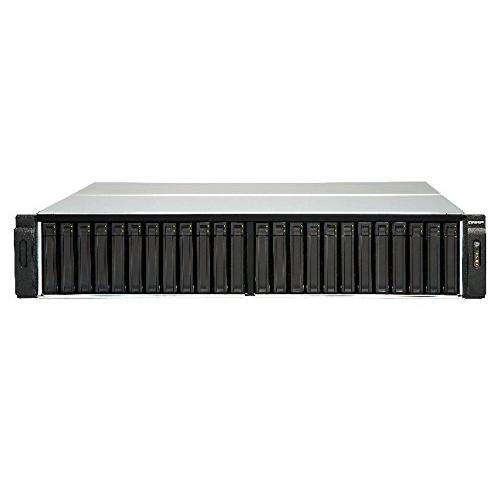
TES-3085U-D1548-32GR – Enterprise‑Grade 30Bay NAS Rack Unit
The TES-3085U-D1548-32GR is a purpose‑built, 2U rack‑mount network attached storage (NAS) appliance designed for high‑performance data centers and large enterprise environments. With its robust hardware configuration, versatile software stack, and comprehensive feature set, it delivers reliable, scalable, and secure storage solutions for demanding workloads.
Hardware Architecture
- Processor: Intel® Xeon® D-1548 (Broadwell) – 8 cores / 16 threads, base frequency 2.00 GHz, boost up to 2.60 GHz, 12 MB L3 cache, 14 nm process technology.
- Memory: 32 GB DDR4 ECC RAM (expandable to 128 GB across four DIMM slots). Dual‑channel architecture ensures low latency and high throughput.
- Storage Bays: 30 × 2.5″ SATA III drives, supporting HDD or SSD modules. Hot‑spare capability for automatic rebuilds.
- PCIe Slots: 1×16 Lanes (x16), 1×4 Lanes (x4), 1×8 Lanes (x8) – all PCIe 3.0, enabling high‑speed expansion cards such as NVMe SSDs or additional network interfaces.
- Network Interfaces: Dual SFP+ ports (10 GbE) and four 1/10 Gb LAN ports with link aggregation support. Jumbo frames enabled for efficient large‑file transfers.
- Power Supply: Dual redundant 500 W units, built‑in, ensuring uninterrupted operation.
- Cooling: Four active 6 cm fans (total of 4 fans) with intelligent thermal monitoring and fan speed control.
- Dimensions & Weight: Height 88.3 mm, width 439 mm, depth 484.5 mm; weighs 14 kg – ideal for dense rack deployments.
Software & Operating System
The device ships with the QNAP Enterprise System (QES) 1.1, a Linux‑based OS optimized for storage workloads. Key software features include:
- Web‑Based Management Console – intuitive GUI accessible via modern browsers (IE 10+, Firefox 8+, Safari 4+, Chrome).
- File System Support – native FAT32, HFS+, NTFS, ZFS, ext3, ext4; enabling seamless interoperability across Windows, macOS, and Linux clients.
- Network Protocols – CIFS/SMB (v2/v3), NFS v3/v4, FTP/FTPS, TFTP, HTTP/HTTPS, SSH, iSCSI, SNMP, SMTP, SMSC.
- Backup & Recovery – built‑in iSCSI LUN support, cloud backup integration, and hot‑spare functionality for data protection.
- Security Suite – AES‑256 encryption, FIPS 140‑2 compliance, HTTPS, SSH, SSL/TLS, SNMPv3, and robust user authentication mechanisms.
- System Monitoring – real‑time thermal monitoring, S.M.A.R.T. drive health checks, event logging, and alerting via email or SMS.
- Virtualization & Container Support – optional Docker containers and virtual machine hosting for lightweight workloads.
RAID & Storage Management
The NAS supports all major RAID levels (0, 1, 5, 6, 10, 50, 60) with flexible allocation of 30 drive bays. The integrated RAID controller offers:
- Hardware‑Accelerated RAID – offloads parity calculations from the CPU.
- Hot‑Spare & Automatic Rebuilds – ensures data integrity without manual intervention.
- Dynamic Storage Pools – allows adding or removing drives on the fly, with minimal downtime.
- Thin Provisioning – optimizes storage utilization for virtualized environments.
Connectivity & Expandability
- SFP+ Ports: Dual 10 GbE SFP+ connectors support fiber or copper modules, ideal for high‑bandwidth interconnects.
- LAN Ports: Four 1/10 Gb Ethernet ports with link aggregation (LACP) for increased throughput and redundancy.
- PCIe Expansion: Three slots allow addition of NVMe SSDs, additional NICs, or storage controllers.
- USB & UART: No USB ports; UART available for serial console access during troubleshooting.
Power Management & Reliability
The system incorporates advanced power‑saving features such as Intel® Enhanced Halt State (EHS), Intel® SpeedStep, and idle state management. Dual redundant power supplies and intelligent fan control provide high availability and low operational costs.
Compliance & Certifications
- Security: AES‑256 encryption, FIPS 140‑2 compliant, HTTPS/SSH/SSL/TLS support.
- Operating System Compatibility: Supports Windows Server 2008 R2/2012/2012 R2, Windows 7/8/10 (various editions), and Linux distributions.
- Network Standards: IPv4 & IPv6 support, SMB3, NFS v4, iSCSI, SNMPv3.
Use Cases
This NAS is engineered for:
- Enterprise File Sharing: Centralized storage with high throughput and robust security.
- Virtualization Hosts: Storage backend for VMware, Hyper‑V, or KVM environments.
- Backup & Disaster Recovery: Reliable data protection with hot‑spare drives and cloud integration.
- Media Streaming & Content Delivery: High‑bandwidth access to large media libraries.
- Big Data Analytics: Scalable storage for analytics workloads requiring fast I/O.
Key Takeaways
The TES-3085U-D1548-32GR delivers a powerful combination of compute, memory, and storage density in a compact 2U form factor. Its enterprise‑grade processor, extensive PCIe lanes, dual SFP+ ports, and comprehensive software stack make it an ideal choice for organizations seeking high performance, scalability, and data protection in a single appliance.
| This product in Comparor | |
|---|---|
|
Category
This product is cataloged in our store in these categories
|
|
|
International
Find this product in one of our international stores
|
  |
| Colors
Predominant colors of the product |
|
| Identifiers | |
| Brand | EET EUROPARTS LTD EET Europarts Ltd. is a European distributor of spare parts and accessories for commercial vehicles. The company offers a wide range of products, including parts for trucks, trailers, buses, and cars. |
| Model | EET EUROPARTS LTD TES-3085U-D1548-32G |
| MPN | EET EUROPARTS LTD TES-3085U-D1548-32G |
| ID | 7191547 |
| Dimensions / Weight | |
| Key Features | |
|
AC input voltage The alternating current voltage range that the product accepts from its power source, expressed in volts (V). It indicates the minimum and maximum supply voltages compatible with the device.
|
90-264 V |
| Backup features | Cloud,iSCSI LUN |
|
Backup function Indicates whether a device has the capability to create backups of its data or settings, allowing restoration in case of loss, failure, or interruption.
|
Yes |
|
Browser supported A list of web browsers that the product can run or support, typically including major desktop and mobile browsers such as Chrome, Firefox, Safari, Edge, Internet Explorer, Opera, and others. Each value represents a distinct browser name or version range that has been verified to work with the device.
|
Internet Explorer 10, Firefox 8, Safari 4, Google Chrome |
|
Built-in FTP server Indicates whether the product includes a built‑in FTP server that allows file transfer and management over the network without requiring an external device.
|
Yes |
| Built-in iTunes server | Yes |
|
Cables included A list of the cable types that are supplied with the product, such as USB, HDMI, VGA, DisplayPort, LAN (RJ‑45), SATA, audio or other relevant connectors.
|
AC,LAN (RJ-45) |
|
Chassis type The physical configuration or shape of a computer chassis, such as tower, rack‑mount (e.g., 1U, 2U), desktop, mini‑PC, or other compact designs. It indicates the overall size and mounting style that determines compatibility with motherboards, power supplies, and case accessories.
|
Rack (2U) |
|
Cooling type The method used to dissipate heat from a component or system, such as active cooling (fans or liquid loops), passive heat sinks, or no active cooling. It indicates whether the product relies on airflow, conduction, or other mechanisms to maintain safe operating temperatures.
|
Active |
|
Depth The linear measurement of an object from front to back or top to bottom, expressed in a physical unit such as millimeters, centimeters, inches, etc. It indicates how deep the item is and can be used for fitting, compatibility, or spatial planning.
|
484.5 mm |
|
Device class A free‑text label that identifies the general category or type of a device, such as "NAS", "Server", "Router", "Storage Enclosure" or any other descriptive class used by manufacturers to classify their products. The value is intended to help users quickly understand the primary function or form factor of the item.
|
Large Enterprise Business |
|
DHCP Client Indicates whether the device supports the DHCP client function, meaning it can automatically request an IP address and related network settings from a DHCP server.
|
Yes |
|
DHCP server Indicates whether the device supports acting as a DHCP server, allowing it to assign IP addresses and network configuration settings to clients on the network.
|
Yes |
|
ECC supported by processor Indicates whether the processor in a device supports Error Correcting Code (ECC) memory, allowing detection and correction of single-bit errors during data storage or transfer.
|
Yes |
|
Embedded options available Indicates whether the product includes embedded options such as firmware features, hardware modules or configuration settings that are built into the device and available for use without external accessories.
|
Yes |
| Enhanced intel speedstep technology | Yes |
|
Ethernet LAN Indicates whether the product includes an Ethernet LAN interface for wired network connectivity, allowing data transmission over RJ‑45 or compatible cables.
|
Yes |
|
Ethernet LAN data rates Maximum theoretical speed at which a device can send or receive data over its Ethernet LAN interface, expressed in megabits per second (Mbps) or gigabits per second (Gbps). It represents the upper bound of throughput under optimal conditions and is useful for comparing network performance between devices with wired connectivity.
|
10,100,1000,10000 Mbit/s |
|
Execute disable bit Indicates whether the processor’s Execute Disable bit is enabled, allowing the CPU to prevent execution of code from memory regions marked as non-executable.
|
Yes |
|
Fan diameter The linear measurement across the widest part of a fan, expressed in units such as millimeters (mm), centimeters (cm) or inches (in). It represents the overall width of the fan and is useful for determining fit, compatibility with cases, and airflow characteristics.
|
6 cm |
| Fiber optic connector | SFP+ |
|
Flash memory The total amount of internal flash memory available in a device, expressed as a data size (e.g., megabytes or gigabytes). This attribute indicates how much data can be stored on the device’s built‑in flash storage.
|
4000 MB |
|
Height The vertical dimension of a product measured from its lowest to highest point. It is expressed in a physical unit such as millimetres, centimetres or inches and applies to any item where height is relevant, including books, electronics, furniture and other objects.
|
88.3 mm |
|
Hot spare Indicates whether the device includes an active backup unit (hot spare) that can automatically replace a failed drive without service interruption.
|
Yes |
|
Hot-swap drive bays Indicates whether the product’s drive bays support hot‑swap, meaning drives can be inserted or removed while the device is powered on without shutting down or rebooting.
|
No |
|
Idle states A list of the various low‑power or standby modes that a device can enter to conserve energy when not actively performing tasks.
|
Yes |
| Installed storage drive type | No |
|
Intel 64 Indicates whether the processor is compatible with the Intel® 64 architecture, enabling it to run operating systems and applications designed for x86‑64 processors.
|
Yes |
|
Intel enhanced halt state Indicates whether the processor includes Intel’s Enhanced Halt State feature, which allows the CPU to enter a low‑power idle mode when not actively executing instructions, thereby reducing energy consumption without compromising performance.
|
Yes |
|
Intel trusted execution technology Indicates whether the product incorporates Intel’s Trusted Execution Technology, a security feature that creates isolated execution environments to protect sensitive code and data from tampering or unauthorized access.
|
Yes |
|
Intel TSX-NI Indicates the specific version of Intel Transactional Synchronization Extensions – No Interlock (TSX‑NI) supported by a processor, which determines its capability for efficient transaction processing and concurrency control.
|
Yes |
|
Internal memory The total amount of internal memory available in a device, expressed as a data size such as megabytes (MB) or gigabytes (GB). It indicates how much information the component can hold for active processes and affects multitasking performance.
|
32 GB |
|
Internal memory type The type of memory physically installed inside a device, such as DDR4 SDRAM, LPDDR3, or other RAM variants. It indicates the architecture and generation of the internal memory modules that the product uses or supports.
|
DDR4 |
| iSCSI support | Yes |
| Jumbo frames support | Yes |
|
LED indicators A list of the functions or statuses that an LED indicator on a device can display, such as power status, activity, link, and other operational signals.
|
LAN,Status |
|
Link aggregation Indicates whether the device can combine multiple network connections into a single logical link to increase bandwidth or provide redundancy.
|
Yes |
|
Linux operating systems supported List of Linux operating systems that the product can run or support, including specific versions and architectures when relevant. Each value represents a distinct Linux distribution or kernel version supported by the hardware or software.
|
Yes |
|
Mac compatibility Indicates whether a product is compatible with Apple Mac computers or macOS operating systems. The value can be "Yes" if the device supports Macs, or "No" if it does not.
|
Yes |
|
Mac operating systems supported A list of macOS operating system versions that the product supports or is compatible with, such as "macOS 10.15 Catalina", "macOS 11 Big Sur" or newer releases. Each entry represents a distinct OS version that can run on or be supported by the device.
|
Yes |
|
Maximum internal memory supported by processor The largest amount of internal random‑access memory (RAM) that a processor can address and support, expressed as a data size such as megabytes or gigabytes. It indicates the upper limit of memory capacity for active processes and multitasking performance on devices using this CPU.
|
128 GB |
|
Memory channels supported by processor The total number of independent memory channels that a processor or motherboard supports for installing RAM modules. Each channel can handle one or more memory sticks, allowing the system to access data in parallel and improving performance.
|
Dual |
|
Memory types supported by processor A list of the types of memory modules that a device can use, such as DDR4 SDRAM, LPDDR3, or other compatible standards. Each entry represents a distinct memory technology supported by the hardware.
|
DDR3-SDRAM,DDR4-SDRAM |
|
Multilingual support Indicates whether a product supports multiple languages for its user interface, documentation or help resources. A value of "Yes" means the device offers language options beyond the default; "No" indicates it is limited to a single language.
|
Yes |
|
Number of storage drives supported The total count of individual storage drives that the product can accommodate or support, whether internal or external. This value indicates how many separate hard‑disk or solid‑state drive units are available for installation or use within the device.
|
30 |
|
On/off switch Indicates whether the product includes an on/off switch that allows the user to power it on or off manually.
|
Yes |
|
Operating system installed The operating system that is installed on the device, indicating the software platform that manages hardware resources and provides services for applications. It can be a commercial OS such as Windows or macOS, an open‑source distribution like Linux, or a proprietary firmware used in embedded devices.
|
QNAP Enterprise System |
|
Operating system version The specific version of the operating system that a product supports or runs, expressed as a numeric revision (e.g., 10, 11) or a descriptive name (e.g., Nougat). This attribute helps users determine compatibility with software and updates.
|
1.1 |
|
PCI Express configurations A textual description of how PCI Express lanes are distributed across the available slots or interfaces in a device. The value typically lists groups of lanes separated by commas, where each group may contain a number of lanes and optional ‘+’ signs to indicate combined lanes that share the same speed (e.g., "1x16", "2x8", "1x8+2x4"). This attribute helps users understand the bandwidth capacity and compatibility of expansion slots.
|
1x16,1x4,1x8 |
|
PCI Express slots version The version of the PCI Express specification supported by a device or component. It indicates the maximum bandwidth and compatibility with PCIe devices such as graphics cards, storage controllers, and expansion cards. The value is typically expressed as a numeric revision (e.g., 2.0, 3.0, 4.0) but may also include descriptive labels for specific generations.
|
2.0,3.0 |
|
Power management Indicates whether the device supports power‑management features such as automatic sleep, wake‑on‑LAN, or energy‑saving modes. A value of "Yes" means the product can enter low‑power states or be remotely controlled to conserve energy; "No" indicates it lacks these capabilities.
|
Yes |
|
Power supply location The physical position where the power supply unit is installed or mounted within a device, such as top, bottom, rear, side, front, or built‑in. This attribute helps users understand where to find the power source and plan cable routing or ventilation.
|
Built-in |
|
Processor ARK ID The Processor ARK ID is a numeric identifier assigned by Intel to each processor model. It uniquely distinguishes one CPU from another and can be used to look up detailed specifications, compatibility information, or firmware updates for that specific chip.
|
91204 |
|
Processor boost frequency The maximum operating frequency that a processor can reach when its turbo or boost feature is active, expressed in hertz (Hz). This value indicates the peak performance capability of the CPU under load and helps users compare how fast a processor can run beyond its base clock speed.
|
2.60 GHz |
|
Processor cache The amount of internal memory reserved for a processor’s cache, expressed in units such as megabytes (MB) or gigabytes (GB). This value indicates how much data the CPU can store locally to accelerate access and improve performance.
|
12 MB |
|
Processor cache type The type or level of the internal cache memory in a processor, such as L1, L2, L3, or Smart Cache. This attribute indicates the hierarchical structure and naming convention used by the CPU manufacturer to describe its cache organization.
|
L3 |
| Processor codename | Broadwell |
|
Processor cores The total number of physical processing units in a single central processing unit (CPU). This value indicates how many independent tasks the CPU can handle simultaneously, influencing multitasking and parallel performance.
|
8 |
|
Processor family The processor family identifies the group or series of CPU models that share a common architecture, design, and performance characteristics. It helps users compare processors across brands and generations by indicating the underlying technology used in the chip.
|
Intel® Xeon® D |
|
Processor frequency The fundamental operating frequency of a processor, expressed in hertz (Hz). It indicates the speed at which the CPU runs under normal conditions and is typically reported in gigahertz (GHz) or megahertz (MHz). This value helps users compare performance potential across different models.
|
2.00 GHz |
|
Processor lithography The lithography process defines the minimum feature size that can be etched onto a semiconductor chip, expressed in nanometers (nm). It indicates the manufacturing technology generation and influences performance, power consumption, and integration density of the processor.
|
14 nm |
|
Processor model Identifies the exact model of the central processing unit used in a device, including brand and numeric designation such as "Intel Core i5-8250U" or "AMD Ryzen 7 3700X". This value allows users to distinguish between different processor families, generations, and performance levels.
|
D-1548 |
|
Processor operating modes The set of instruction set architectures or execution modes that a processor can operate in, such as 32‑bit or 64‑bit. This attribute indicates the architectural mode(s) supported by the CPU and helps users determine compatibility with software that requires a specific bitness.
|
64-bit |
|
Processor package size The overall dimensions of a processor’s physical package, expressed as length × width × height in millimetres or inches. It indicates the size that must fit within a motherboard socket or mounting area and helps users compare compatibility across different CPU models.
|
37.5 x 37.5 mm |
|
Processor series The processor series identifies the family or generation of a CPU, such as "Intel Xeon E5-2600" or "AMD Ryzen 5000". It is used to group models that share similar architecture, performance characteristics and compatibility features.
|
Intel Xeon D-1500 |
|
Processor socket The physical connector used by a processor to attach to a motherboard or other compatible platform. Common examples include LGA 1151, BGA 1440, Socket AM4, and LGA 1200. This attribute indicates the exact socket designation required for proper CPU installation and compatibility.
|
BGA 1667 |
|
Processor threads The number of independent execution units (threads) that a processor can handle simultaneously. This value indicates how many parallel tasks the CPU can process at once, which affects multitasking performance and workload distribution.
|
16 |
|
Quick installation guide Indicates whether a quick‑installation guide is provided with the product. A value of "Yes" means that a brief, step‑by‑step manual or overview is included to help users set up the device quickly; "No" indicates that no such guide is supplied.
|
Yes |
|
Rack mount kit Indicates whether the product is a rack mounting kit and, if applicable, its compatibility with standard rack systems. The value can be "Yes" or "No", or it may include a measurement such as "1U" or "2U" to specify the height occupied by the kit when installed in a rack.
|
Yes |
|
RAID levels A comma‑separated list that specifies the RAID configurations supported by a storage controller or device. Each entry can be a numeric level (e.g., 0, 1, 5, 10) or a special label such as JBOD. This attribute indicates which disk arrangements the system can manage.
|
0,1,5,6,10,50,60 |
|
RAID support A comma‑separated list of RAID levels that a storage device or controller can support, such as 0, 1, 5, 10, JBOD, and other proprietary configurations. Each value represents a distinct RAID mode the system is capable of creating or managing.
|
Yes |
|
Reset button Indicates whether the device has a physical reset button that restores factory settings or original configuration when pressed.
|
Yes |
|
S.M.A.R.T. support Indicates whether the product supports S.M.A.R.T. (Self-Monitoring, Analysis and Reporting Technology), a feature that monitors storage device health and predicts failures.
|
Yes |
|
Scalability The maximum number of CPU sockets that a product can support. It indicates how many processor units can be installed simultaneously in the system, which affects overall processing capacity and scalability.
|
1S |
|
Security algorithms Una lista de los algoritmos criptográficos y protocolos de seguridad que el producto soporta, como cifrado (AES, WEP), autenticación (WPA2-PSK, EAP-TLS) o protocolos de red (HTTPS, SSH). Cada elemento describe un algoritmo individual; la lista puede contener varios valores separados por comas.
|
256-bit AES,FIPS 140-2,HTTPS,SNMP,SSH,SSL/TLS |
|
Server operating systems supported A list of operating systems that the product can run or support, including specific versions and architectures when relevant. Each value represents a distinct OS that is compatible with the hardware or software.
|
Windows Server 2008 R2,Windows Server 2012,Windows Server 2012 R2 |
|
Share folder A list of network file‑sharing protocols that the device can use to expose shared folders or drives. Common values include CIFS/SMB, AFP, NFS, FTP, and WebDAV. The attribute helps users understand which remote access methods are available for mounting or accessing storage on the device.
|
CIFS/SMB |
|
Storage drive size A list of the physical drive sizes that are compatible with the product, such as "2.5"", "3.5"", and "M.2". This attribute helps users determine which external or internal drives can be used with the device.
|
2.5" |
|
Storage drives installed The total count of individual storage devices (hard disk drives or solid‑state drives) that are physically present in the product. It indicates how many separate drives are installed, regardless of capacity or interface type.
|
No |
|
Supported file systems A comma‑separated list of file system formats that the product can read or write, such as FAT32, NTFS, ext4, exFAT, HFS+, and others. Each value represents a distinct storage format supported by the device’s firmware or operating system.
|
FAT32,HFS+,NTFS,ZFS,ext3,ext4 |
|
Supported network protocols A list of network communication protocols that a device can use or support, such as TCP/IP, HTTP, HTTPS, FTP, DHCP, DNS, and various wireless standards. Each protocol is represented by its standard name and may be separated by commas or slashes in the source data.
|
IPv4, IPv6, MB2/SMB3, NFS v3/NFS v4, FTP, FTPS, TFTP, HTTP, HTTPS, SSH, iSCSI, SNMP, SMTP, SMSC |
|
Supported storage drive interfaces List of physical or logical interfaces that allow an internal storage drive to communicate with the system, such as SATA, M.2 PCIe, U.2, SAS, NVMe, or other standard connections.
|
Serial ATA III |
|
Supported storage drive types A list of the types of storage drives that a product can accommodate or use, such as HDD, SSD, or hybrid configurations. Each entry indicates a distinct drive type that is supported by the device’s bays, slots, or external interfaces.
|
HDD,SSD |
|
System log Indicates whether the product includes a system log feature that records events, errors, or status updates for troubleshooting and monitoring purposes. The value is a simple yes/no answer.
|
Yes |
| Thermal monitoring technologies | Yes |
|
Type The general category or style of the product, such as laptop, printer cartridge, or cooling fan. It helps buyers quickly identify the nature of the item and compare similar products.
|
NAS |
|
UART Indicates whether the product includes a UART (Universal Asynchronous Receiver/Transmitter) serial communication interface. A value of "Yes" means the device has at least one UART port for transmitting and receiving serial data; "No" indicates no such interface is present.
|
Yes |
|
USB port Indicates the presence and quantity of USB connectors on a product. The value is typically an integer representing how many USB ports are available, regardless of type or version.
|
No |
|
Wake-on-LAN ready Indicates whether the device can be powered on remotely via Wake‑on‑LAN, allowing a network administrator or user to start it from sleep or off state using a network packet.
|
Yes |
|
Web-based management Indicates whether the product can be configured and monitored through a web interface accessible via a browser, allowing remote administration over a local or internet connection.
|
Yes |
|
Wi-Fi Indicates whether the product has built‑in Wi‑Fi capability, allowing it to connect to wireless networks without requiring external adapters or dongles.
|
No |
|
Width The horizontal measurement of a product, expressed in a linear unit such as millimetres or inches. It indicates how wide the item is from one side to the other and is used for sizing, fitting, and compatibility purposes.
|
439 mm |

Related articles


